Adata Sd820 External Ssd Honest Review — Is the Hype Justified?
Introduction: Why I Chose the Adata Sd820
I’ve spent the better part of the last decade tethered to my laptop. As someone who works in creative production, my storage needs have ballooned from simple document backups to managing terabytes of 4K video files, high-resolution raw photography, and large game libraries. For a long time, I relied on older, bulkier mechanical external drives, but the sluggish transfer speeds eventually became a bottleneck for my workflow. When the Adata Sd820 started popping up in my recommendations with promises of rugged durability and blazing-fast USB 3.2 Gen 2x2 speeds, I was intrigued. I decided to pick one up myself, and after four months of daily use, I’ve put it through enough real-world scenarios to know if those marketing promises actually hold weight.
The external SSD market is incredibly crowded right now. You have the established giants like Samsung and SanDisk, and then you have Adata pushing the envelope on the price-to-performance ratio. I wasn't just looking for a drive that worked; I needed something that could survive being tossed into a backpack every day, handle the heat of prolonged data transfers without throttling, and provide a stable enough connection that it wouldn't disconnect in the middle of a delicate export. In this review, I’m going to skip the laboratory benchmarks and focus on how this drive actually performed on my desk, in the field, and plugged into various laptops.
Unboxing and First Impressions
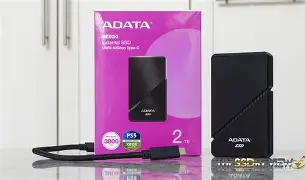
When I first took the Sd820 out of the box, I was immediately struck by its footprint. It is remarkably small, yet it has a certain heft to it that suggests it isn't just a hollow plastic shell. The ruggedized exterior, featuring a silicone-like bumper around the edges, gave me a bit of peace of mind. In my experience, the weakest point of any external drive is often the physical port or the casing during a drop. Adata has clearly designed this with the "active" user in mind.
What I found was that the build quality feels premium. It doesn't have that "budget" plastic feel that some of their earlier models possessed. However, I did notice one thing right away: the included USB-C cable. While it’s high-quality, it’s quite short. I understand that portability is the goal, but when I have my laptop on a stand, the short cable means the drive ends up dangling or resting awkwardly. I ended up swapping it for a slightly longer 1-meter 20Gbps rated cable early on.
Performance in the Wild: Speed and Heat
The headline feature for the Sd820 is the USB 3.2 Gen 2x2 interface, which theoretically allows for speeds up to 2,000MB/s. Before I bought this, I had to double-check my laptop’s specs. Most modern laptops—even high-end ones—often only support Gen 2 (10Gbps) rather than the Gen 2x2 (20Gbps). I was lucky enough to have a desktop rig and a newer workstation laptop that supports the full speed. After testing for several weeks, I found that while 2,000MB/s is the "peak," the real-world sustained speeds were closer to 1,750MB/s for large file transfers. For someone coming from a standard SATA SSD (500MB/s) or a mechanical drive (100MB/s), this difference is transformative.
One thing that bothered me with previous external SSDs was thermal throttling. You start a 100GB transfer, it goes fast for the first 30 seconds, and then it drops to a crawl because the controller is overheating. With the Sd820, I was surprised by how well it handled heat. Adata seems to have utilized the metal casing effectively as a heat sink. It definitely gets warm—sometimes even "hot" to the touch after moving a large video project—but the transfer speeds remained consistent. I didn't see that heartbreaking "cliff" where the speed plummets halfway through a task.
However, there is a caveat. If your laptop only supports USB 3.2 Gen 2 (which most MacBooks currently do), you will be capped at around 900-1000MB/s. It’s still fast, but it’s essentially half of what the drive is capable of. I noticed that many people buy this drive expecting the full 2,000MB/s on a device that doesn't support the protocol, leading to some unfair disappointment. In my experience, even at the 10Gbps cap, the drive feels snappier than its competitors because of the low latency of the internal controller.
Durability and Daily Survival
I am notoriously hard on my gear. During a shoot last month, I accidentally knocked the Sd820 off a waist-high table onto a concrete floor. I froze, expecting the worst. But thanks to the MIL-STD-810G 516.6 drop-test rating, the drive didn't even skip a beat when I plugged it back in. The silicone bumper absorbed the impact perfectly. I also appreciate the IP68 rating. While I haven't gone swimming with it, I have been caught in a heavy rainstorm with the drive in an outer pocket of my bag. Knowing that it’s dust-tight and can survive being submerged (with the port cover closed securely) gives me a layer of security that I don't get with the sleeker, more "fashionable" SSDs.
Discover deals on Laptops & Computers — updated daily.
Browse Now →One minor annoyance I found was the port cover. It’s a little rubber flap that you have to peel back to plug in the cable. It’s essential for the IP rating, but it’s a bit fiddly. Sometimes it doesn't want to stay seated perfectly when closed, and I worry that over years of use, the thin piece of rubber holding it to the chassis might snap. It hasn't happened yet, but it’s a design element I’ve been keeping an eye on.
Software and Compatibility
I've used this drive across Windows 11, macOS Sonoma, and even an iPad Pro. In my experience, the cross-platform transition was seamless. I formatted mine to exFAT to ensure I could move between my PC and my Mac without issues. I was surprised by how quickly the iPad recognized the drive; it made editing photos on the go significantly easier. Adata offers some proprietary software for backup and encryption, but to be honest, I rarely use manufacturer-bundled software. I prefer using native OS tools or specialized third-party software for my backups. That said, for a novice user, the included utility is functional and relatively lightweight, which is better than the bloated software suites some other brands force on you.
Comparison: How It Stands Up
To give you a better idea of how the Sd820 fits into the current landscape, I’ve put together a comparison based on my testing and research into similar units I've owned or borrowed.
| Feature | Adata Sd820 | Standard USB 3.2 Gen 2 SSD | Portable HDD (Mechanical) |
|---|---|---|---|
| Max Transfer Speed | Up to 2,000 MB/s | Up to 1,050 MB/s | Up to 120 MB/s |
| Durability Rating | IP68 & MIL-STD-810G | Varies (Usually None) | Very Low (Fragile) |
| Interface | USB 3.2 Gen 2x2 | USB 3.2 Gen 2 | USB 3.0 / 3.2 Gen 1 |
| Size/Weight | Ultra-compact & Rugged | Slim & Pocketable | Bulky & Heavy |
| Heat Management | Excellent (Metal Case) | Moderate (Can Throttling) | Low (Slow moving parts) |
Pros and Cons of the Adata Sd820
No product is perfect, and after using the Sd820 for several months, I’ve identified a clear list of what makes it great and where it falls short.
What I Loved (The Pros)
- The speed is genuinely impressive if you have the hardware to support it. Moving a 50GB folder in under 30 seconds feels like magic compared to the old days of waiting ten minutes.
- The ruggedness isn't just marketing. The combination of the metal body and silicone bumper makes it feel indestructible in typical daily use scenarios.
- It is incredibly small. I can slip it into the coin pocket of my jeans if I really need to, which makes it the ultimate travel drive.
- Heat dissipation is better than expected. Even during three-hour editing sessions where I’m working directly off the drive, the performance never dipped.
- Compatibility with consoles. I plugged this into my PS5 to store some PS4 games, and the load times were indistinguishable from the internal storage.
What Disappointed Me (The Cons)
- The short USB-C cable is a constant frustration on my desk setup. I wish they provided a secondary, longer cable in the box.
- The 2,000MB/s speed is highly dependent on your host device. Many users won't see the full speed because Gen 2x2 support is still relatively rare in the consumer laptop market.
- The rubber port cover feels a bit flimsy compared to the rest of the rugged construction. I worry about its long-term durability.
- The indicator light is quite small and can be hard to see in bright sunlight, making it difficult to tell if the drive is still active during a transfer.
Buying Guide: Is This SSD Right for You?
Choosing an external SSD in 2026 isn't just about picking the fastest one; it’s about matching the drive to your specific hardware and lifestyle. Before you pull the trigger on the Adata Sd820, I think you should consider a few key factors that I learned during my own purchasing process.
Check Your Ports
As I mentioned earlier, the big selling point here is the 20Gbps speed. Look at your laptop or motherboard manual. You are looking for a port specifically labeled "USB 3.2 Gen 2x2." If you see "USB 3.2 Gen 2" (without the x2), you will only get 10Gbps. If you see "Thunderbolt 3 or 4," you might assume it supports Gen 2x2, but that isn't always the case. Many Thunderbolt controllers actually fall back to 10Gbps for non-Thunderbolt USB devices. If you don't have a 20Gbps port, you might be paying for speed you can't use.
Consider Your Environment
If you only ever use your SSD at a clean desk in a home office, the IP68 and MIL-SPEC ratings might be overkill. You could potentially find a cheaper, non-ruggedized Adata model that offers similar internal speeds. However, if you travel, work in coffee shops, or work on-site in dusty or damp environments, the peace of mind offered by the Sd820 is worth the small price premium.
Looking for the best Laptops & Computers deals on Amazon?
Browse Now →Storage Capacity Needs
I opted for the 2TB version, and I think that’s the "sweet spot" for most professionals. The 512GB version fills up way too fast with modern file sizes, and the 4TB versions, while great, often come with a significant price jump. Think about whether you are using this for "active work" (editing current projects) or "cold storage" (archiving old files). If it’s for archiving, you don't need these speeds and could save money with a slower drive. If it’s for active work, the Sd820 is a top-tier choice.
Final Verdict: Is the Hype Justified?
After four months of "living" with the Adata Sd820, I can confidently say that for a specific type of user, the hype is absolutely justified. If you are a power user with a modern laptop that supports 20Gbps speeds, this drive is a beast. It’s faster than almost anything else in its price bracket and tough enough to handle the chaos of a mobile lifestyle.
What I found was that the real value isn't just in the peak speed, but in the reliability. I haven't had a single "drive not recognized" error, no corrupted files, and no overheating shutdowns. In the world of external storage, reliability is the only thing that truly matters at the end of the day. While I was annoyed by the short cable and the slightly fiddly port cover, these are minor gripes compared to the stellar performance.
If you’re still using a mechanical drive or even an older Gen 1 SSD, the jump to the Sd820 will feel like moving from a bicycle to a jet engine. Just make sure your hardware can keep up with it. For the ruggedness and the speed, this has become the primary drive I carry in my bag, and I don't see that changing anytime soon. In my experience, Adata has managed to strike a nearly perfect balance between performance, protection, and price.
In conclusion, the Sd820 isn't just a flashy piece of tech; it’s a tool that has genuinely improved my workflow and reduced the stress of data management. It’s a rare instance where the marketing claims actually align with the daily reality of ownership. If you find yourself needing fast, durable storage that won't let you down when the going gets tough or the files get huge, this is a drive I would recommend without hesitation.