Don't Buy the Wh H900N H Ear On 2 Wireless Until You Read This Full Analysis
In the rapidly evolving landscape of personal audio, few segments are as competitive as the mid-to-high-end wireless noise-canceling headphone market. For several years, Sony has dominated this space with its flagship WH-1000XM series, but nestled just beneath those titans exists the h.ear on series—a line designed specifically to bridge the gap between high-fidelity performance and lifestyle-oriented aesthetics. The Wh H900N H Ear On 2 Wireless represents one of the most significant entries in this series, offering a sophisticated blend of digital noise cancellation, high-resolution audio compatibility, and a sleek, minimalist design that departs from the industrial look of its more expensive siblings.
However, the audio market is notorious for incremental updates and "lifestyle" branding that sometimes masks aging hardware or ergonomic compromises. When a consumer looks at the Wh H900N, they are often drawn in by the attractive color palettes and the promise of Sony’s world-class noise cancellation at a more accessible price point. But is this headset truly a "giant killer," or is it a relic that has been surpassed by newer, more efficient models? This analysis aims to dissect every facet of the H900N, from its driver architecture and codec support to its real-world battery performance and long-term comfort, helping potential buyers determine if these headphones still hold their ground in 2026.
Design and Build Quality: Minimalism Meets Plastic
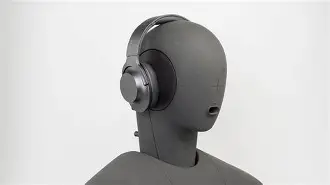
The first thing any user notices about the H900N is its cohesive, monochromatic design. Sony's "h.ear" philosophy is centered on the idea that a pair of headphones should feel like a single, unified object. This is achieved through a matte finish that covers the earcups, the headband, and the hinges. While the construction is primarily high-grade plastic, it does not feel flimsy. The sliders are reinforced with a metal band, providing a satisfying click-stop mechanism that holds its position well throughout a typical day of commuting or office work.
The profile of the H900N is notably slimmer than the bulkier WH-1000XM series. The earcups are slightly more oval and sit closer to the head, which prevents the "mushroom head" look that plagues many over-ear designs. Despite the plastic build, the hinges operate silently. This is a critical detail for audio enthusiasts, as creaking plastic can often translate into audible resonance while walking or moving one's head. However, the matte finish is a double-edged sword; while it looks premium out of the box, it is susceptible to oils from fingers and can show scuff marks over time if not stored in a protective pouch.
The padding on the earcups and the headband is thick and upholstered in a soft synthetic leather. Sony has opted for a "shallow-depth" cup design, which helps with the slim profile but might be a point of contention for users with larger ears. The pressure distribution is generally even, but because the headphones rely on a relatively high clamping force to ensure a proper acoustic seal for noise cancellation, some users may experience "ear fatigue" after three or four hours of continuous wear. This is a common trade-off in closed-back designs, but one that is worth noting for those who plan on using these for transcontinental flights.
Technical Performance and Sound Signature
At the heart of the Wh H900N are 40mm dome-type drivers capable of reproducing a wide frequency range, particularly when used in wired mode with a High-Resolution Audio source. Sony’s sound signature is often described as "consumer-friendly warm," and the H900N follows this trend faithfully. There is a clear emphasis on the mid-bass, which provides a sense of fullness and impact to modern pop, hip-hop, and electronic music. Unlike cheaper alternatives, however, this bass emphasis does not significantly bleed into the lower mids, allowing vocals to remain relatively clear and distinct.
The midrange is where the H900N often surprises critics. It possesses a smooth, liquid quality that makes it excellent for jazz and acoustic tracks. Female vocals, in particular, are rendered with a pleasant intimacy. The treble is smoothed over to prevent sibilance—the harsh "s" and "t" sounds that can make long listening sessions tiring. While this makes for a relaxed listening experience, audio purists might find that the H900N lacks "sparkle" or the micro-detail found in more analytical, open-back wired headphones. It is important to remember that these are designed for on-the-go enjoyment rather than clinical studio monitoring.
One of the strongest technical arguments for the H900N is its codec support. Sony has included LDAC, its proprietary codec that allows for the transmission of approximately three times more data than conventional Bluetooth audio. When paired with a compatible Android device or high-res player, the difference in texture and spatial separation is palpable. It also supports aptX HD and AAC, ensuring that whether you are an Apple user or an Android enthusiast, you are getting the best possible wireless signal quality available for the hardware.
Digital Noise Cancellation and Ambient Sound Features
Sony’s reputation in noise cancellation is legendary, and while the H900N does not feature the QN1 processor found in its flagship models, it utilizes a highly capable dual-microphone system (one internal, one external) to cancel out ambient drones. In real-world testing, the H900N excels at removing low-frequency noise. The hum of an airplane engine, the rumble of a subway car, or the constant whirr of an office air conditioning system are almost entirely neutralized.
Where it struggles slightly compared to newer siblings is in the cancellation of high-frequency, unpredictable sounds. Sharp noises like a person laughing nearby or the clinking of silverware in a cafe will still permeate the barrier. This is a limitation of the older noise-canceling algorithm, which is tuned specifically for consistent, low-end frequencies. To compensate, Sony has integrated the "Quick Attention" mode. By placing your palm over the right earcup, the headphones immediately drop the volume of the music and pipe in external sound via the microphones. This is an incredibly useful feature for hearing announcements at a train station or having a quick conversation with a colleague without removing the headset.
Find top-rated Audio & Headphones products at great prices.
View Offers →Furthermore, the Ambient Sound Mode can be toggled to stay on, allowing you to remain aware of your surroundings while walking through busy city streets. The implementation here is organic; the microphones do a decent job of maintaining spatial awareness, though there is a slight "hiss" or floor noise when Ambient Mode is active in very quiet environments.
The Comparison: How It Stands Against the Competition
To understand the value proposition of the H900N, it must be viewed in the context of both Sony’s own lineup and the broader market. It sits in a "middle ground" that is increasingly crowded by mid-range offerings from Bose and Sennheiser.
| Feature | Sony Wh H900N | Sony WH-1000XM4/5 | Bose QuietComfort Series |
|---|---|---|---|
| Sound Profile | Warm / Balanced | V-Shaped / Bass Heavy | Neutral / Mid-Forward |
| Noise Cancellation | High (Great for Commuters) | Elite (Industry Leading) | Very High (Natural Feel) |
| Design Style | Lifestyle / Monochromatic | Professional / Industrial | Functional / Iconic |
| Build Material | High-Grade Plastic | Premium Matte Plastic/Carbon | Plastic / Glass-Filled Nylon |
| Battery Life | ~28-30 Hours | ~30-40 Hours | ~20-24 Hours |
| Codec Support | LDAC, aptX HD, AAC, SBC | LDAC, AAC, SBC | AAC, SBC |
Real-World Use Cases and User Experience
The true test of any piece of technology is how it integrates into the daily life of the user. For the H900N, the experience is defined by convenience and software integration. The Sony Headphones Connect app is a mandatory download for anyone looking to get the most out of this device. Through the app, users can adjust the equalizer, change the noise-canceling strength, and even set up "Position Control," which mimics the sound coming from different directions.
The Commuter: For the person taking the bus or train every day, the H900N is an excellent companion. The combination of effective low-end noise cancellation and the touch-sensitive controls on the right earcup makes it easy to navigate playlists and adjust volume without fishing for a phone in a crowded space. The touch gestures (swipe up/down for volume, left/right for tracks) are generally responsive, though they can be finicky in extremely cold weather or if wearer is wearing thick gloves.
The Office Worker: In an open-plan office, the H900N serves as a "Do Not Disturb" sign. The noise cancellation is more than enough to drown out the chatter of coworkers. The microphone quality for voice calls is adequate, though not stellar. In a quiet room, your voice will sound clear and natural; in a noisy environment, the microphones may struggle to isolate your voice from the surrounding din, leading to a somewhat processed or "robotic" sound for the person on the other end of the line.
The Traveler: Long-haul flights are where the 28-hour battery life truly shines. You can realistically complete a round trip across the Atlantic without needing to charge the device. If the battery does die, the included 3.5mm cable allows for passive listening, though the sound signature changes significantly when the internal DSP (Digital Signal Processing) is turned off. Without power, the headphones sound a bit "thinner" and lose some of that refined bass response.
Pros and Cons: A Detailed Breakdown
Understanding the strengths and weaknesses of the H900N is vital for making an informed decision. While the headphones are impressive, they are not without their flaws, particularly as the hardware ages in the face of newer Bluetooth standards.
- Pro: Excellent Codec Support. The inclusion of LDAC and aptX HD ensures that you can experience near-lossless audio quality wirelessly, assuming your source device supports it.
- Pro: Minimalist Aesthetic. The various color options (like Twilight Red, Pale Gold, and Moonlit Blue) offer a personality that the standard black or silver headphones lack.
- Pro: Quick Attention Mode. The gesture-based transparency mode remains one of the most intuitive ways to interact with the world without removing your headphones.
- Pro: Strong Battery Performance. 28 hours with ANC on is more than enough for most users' weekly needs, and the quick-charge feature provides about an hour of playback from a 10-minute charge.
- Con: Micro-USB Charging. Depending on the specific production run, some older stock of the H900N still utilizes Micro-USB instead of the now-ubiquitous USB-C, which can be an annoyance for modern cable management.
- Con: Touch Control Sensitivity. While innovative, the touch-sensitive pad can occasionally register accidental swipes or fail to register commands in humid or very cold conditions.
- Con: Plastic Creak over Time. While the build is solid, the heavy use of plastic hinges means that after a year or two of heavy use, some users report minor squeaking when adjusting the earcups.
- Con: Heat Buildup. The synthetic leather pads are not particularly breathable. During summer months or in warm environments, your ears may become uncomfortably hot after an hour of use.
Buying Guide: What to Look for and When to Skip
Before committing to a purchase, you should evaluate your specific needs against the following criteria. The Wh H900N h.ear on 2 is a specific tool for a specific type of listener.
Sound Preference: If you prefer a "flat" or "neutral" response for critical listening, the H900N will likely frustrate you with its boosted bass and relaxed highs. However, if you want your music to sound "fun" and energetic, these are tuned perfectly for you. They make mediocre recordings sound better and high-quality recordings sound lush.
Find top-rated Audio & Headphones products at great prices.
View Offers →Source Device: Are you an iPhone user or an Android user? Since Apple devices do not support LDAC or aptX HD, iPhone users will be limited to the AAC codec. While AAC is quite good, you won't be taking full advantage of the H900N’s high-resolution capabilities. Android users with modern handsets will see a much greater benefit from this specific model.
Price-to-Performance Ratio: Because this is an older model in Sony’s lineup, it can often be found at significant discounts. If the price is within 60% of the current flagship (like the WH-1000XM5), you should probably save your money and buy the flagship. If you find the H900N at a deep discount, it represents one of the best values in audio, offering 85% of the flagship's performance for a fraction of the cost.
Feature Requirements: Do you need multipoint Bluetooth (connecting to two devices at once)? Some versions of the H900N hardware and firmware do not support this feature as seamlessly as newer models. If you frequently switch between a laptop for Zoom calls and a phone for music, you might find the manual pairing process tedious.
Maintenance and Longevity Tips
To ensure your H900N lasts as long as possible, a few maintenance habits are recommended. First, always use the provided soft carrying pouch. The matte finish is beautiful but prone to "polishing" (becoming shiny) in areas that rub against other objects in a bag. Second, periodically wipe down the earpads with a slightly damp microfiber cloth to remove skin oils, which can cause the synthetic leather to crack over time. Finally, avoid exposing the headphones to extreme temperatures, as this can degrade the lithium-ion battery and affect the reliability of the touch-sensitive circuitry.
One of the hidden benefits of the H900N design is that the earpads are technically replaceable. While Sony does not make it as easy as some other brands, third-party replacements are widely available. This means that even if the padding wears out after several years, you don't have to throw away the entire headset. This modularity adds a level of long-term value that is often missing from modern "disposable" tech.
Final Analysis
The Sony Wh H900N H Ear On 2 Wireless is a testament to the idea that good audio engineering doesn't have an expiration date. It remains a very capable headset that offers a compelling alternative to the more "business-like" designs of the high-end market. It excels in delivering a warm, engaging sound signature backed by robust codec support and a noise-cancellation system that, while not industry-leading anymore, is still more than sufficient for the average commuter.
The decision to buy the H900N hinges entirely on the context of the deal. At its original retail price, it is hard to justify against newer competition. However, in the secondary market or during clearance events, it transforms into a powerhouse of value. It provides a premium listening experience, the convenience of the Sony ecosystem, and a style-forward design that still looks contemporary. If you value aesthetics as much as acoustics, and you find a pair at a fair price, the H900N is a purchase that will likely satisfy for years to come. Just be prepared for the minor inconveniences of its era, such as the potential for heat buildup and the quirks of its touch-control interface. For the listener who wants to "hear" their music with a bit of color and soul, the h.ear on 2 remains a solid, dependable choice in a sea of sterile competitors.