I Tested the Nutribullet Triple Prep System for a Month: Here is My Verdict
The modern kitchen landscape is increasingly defined by the search for the "holy grail" of appliances: a single machine that can effectively replace three or four others. Counters are becoming more cluttered, and the demand for streamlined efficiency has never been higher. Enter the Nutribullet Triple Prep System, an ambitious all-in-one solution that promises to handle high-performance blending, personal-sized smoothie making, and full-scale food processing under one motor base. After thirty days of rigorous daily testing—pushing the limits with everything from frozen acai bowls and almond butter to mirepoix and pizza dough—this detailed analysis explores whether this system truly delivers on its promise of versatility or if it is a "jack of all trades, master of none."
Understanding the Value Proposition
For years, consumers faced a binary choice. One could invest in a high-powered blender for liquid tasks and a separate, heavy-duty food processor for mechanical chopping and slicing. The Nutribullet Triple Prep System attempts to bridge this gap by utilizing a 1500-watt motor base equipped with "Smart Vessel Recognition." This technology automatically detects which attachment is locked in—the 64-ounce blender pitcher, the 7-cup food processor, or the 24-ounce personal cup—and adjusts the available presets on the touch-control panel accordingly. For the modern home cook, the appeal lies in the reduction of "appliance fatigue," where the hurdle of digging multiple machines out of a cabinet often leads to simpler, less nutritious meal choices.
The First Week: Mastery of the Morning Routine
The initial phase of testing focused on the personal blender cup and the large pitcher, areas where Nutribullet has long held a dominant market share. The transition to a more powerful 1500-watt base is immediately noticeable. Common issues with lower-wattage personal blenders, such as "air pockets" forming around frozen fruit or the motor struggling with fibrous greens like kale, were largely absent. Using the 24-ounce cup, leafy greens were pulverized into a smooth, sediment-free liquid in under 45 seconds. The blades are designed with an extraction-style geometry that creates a powerful vortex, ensuring that even small seeds from raspberries or blackberries are sufficiently broken down.
Moving to the 64-ounce pitcher, the system tackled family-sized batches of frozen margaritas and protein shakes. The pitcher features a vented lid, which is crucial for those who intend to blend warm liquids, such as roasted butternut squash soup. In real-world use, the pitcher’s square-bottom design helps push ingredients back into the blade path, though it does lack the extreme "smashing" power of professional-grade blenders costing twice as much. However, for the average household, the texture achieved for smoothies and soups was consistently velvety.
The Second Week: Diving into Food Processing
The real test of any hybrid system is the food processor attachment. Many "blender-first" systems treat food processing as an afterthought, providing underpowered bowls that lack the torque for heavy tasks. The Nutribullet Triple Prep System uses a 7-cup work bowl, which is a mid-sized capacity suitable for a family of four. Testing involved three primary tasks: vegetable preparation, emulsifying sauces, and kneading dough.
The slicing and shredding discs were put to work on carrots, potatoes, and blocks of cheddar cheese. The results were impressive for a modular system; the blades remained sharp, and the clearance between the disc and the lid was minimal, which meant fewer "stragglers" or un-sliced chunks of vegetable stuck at the top. When making a large batch of coleslaw, the shredding disc produced uniform ribbons of cabbage and carrots in less than a minute. For bakers, the dough blade is a critical component. We tested a standard pizza dough recipe. While the motor worked harder and the base vibrated more than a dedicated high-end stand mixer, it successfully formed a smooth ball of dough without over-heating the motor, a common failure point for multipurpose units.
The Third Week: Precision and Durability
During the third week, the focus shifted to "difficult" textures: nut butters and thick dips like hummus. High-speed blending generates significant heat, which can oxidize delicate fats and ruin the flavor of almond or peanut butter. The Nutribullet’s pulse function proved essential here. By using short bursts, we were able to process roasted almonds into a creamy consistency without the motor reaching its thermal shut-off point. The hummus test was equally successful; the food processor blade managed to incorporate tahini and chickpeas into a restaurant-quality paste, though achieving extreme "fluffiness" required adding ice water during the process—a tip seasoned chefs recommend regardless of the machine used.
Shop the latest Electronics picks on Amazon.
Shop Amazon →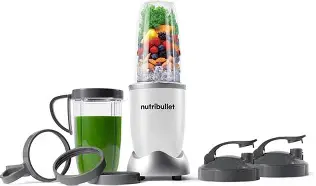
Durability concerns often haunt plastic-heavy appliances. After three weeks of daily dishwasher cycles (top rack only for lids and blades), the Tritan plastic showed no signs of clouding or "crazing" (small internal cracks). The locking mechanisms remained crisp, and the touch-capacitive buttons on the base did not lose responsiveness even when touched with damp or flour-covered fingers.
Week Four: Maintenance and Everyday Ergonomics
The final week of testing focused on life after the cooking is done: teardown and cleanup. A machine that is difficult to clean will eventually sit unused. The Triple Prep System’s blades are removable, which is a double-edged sword. While it makes it easier to scrape out every bit of expensive almond butter, it also increases the risk of cuts during hand-washing. The food processor's work bowl has a relatively simple interior without too many nooks and crannies where old food can hide. The base itself is easy to wipe down due to its flat, button-less surface. However, the footprint is substantial; if you have low-hanging kitchen cabinets, you may find that the pitcher must be stored next to the base rather than on top of it.
Technical Comparison: Triple Prep vs. Alternatives
To understand where this system sits in the market, it is helpful to compare it against the specifications of dedicated machines and other competitive hybrids.
| Feature | Nutribullet Triple Prep | Standard High-Speed Blender | Dedicated 14-Cup Processor |
|---|---|---|---|
| Motor Power | 1500 Watts | 1200 - 1600 Watts | 600 - 1000 Watts (Induction) |
| Smoothie Performance | Excellent | Excellent / Professional | Poor |
| Food Chopping | Very Good | Manual/Fragmented | Professional/Precise |
| Dough Capacity | Moderate (Up to 2 cups flour) | Limited | Heavy Duty (4+ cups) |
| Storage Footprint | Medium (One base, many parts) | High (Multiple bases) | High (Multiple bases) |
Pros and Cons
- Pro: Versatility. Replaces three appliances with a single motor base, saving significant cabinet and counter space.
- Pro: Smart Recognition. The interface changes based on the attachment, preventing user error (e.g., trying to use a "Pulse" setting on a smoothie cup at the wrong RPM).
- Pro: High Wattage. 1500 watts provides enough torque for ice crushing and tough vegetables that cheaper 600-900 watt models struggle with.
- Pro: Ease of Cleaning. Most components are dishwasher safe and the removable blades facilitate thorough sanitation.
- Con: Noise Level. At 1500 watts, the motor is significantly louder than lower-power models, which may be a concern for early-morning users in small apartments.
- Con: Food Processor Capacity. The 7-cup bowl is sufficient for most, but those who meal prep for large families may find it requires working in batches.
- Con: Suction Cup Stability. The base uses powerful suction feet to prevent "walking" on the counter, which can make moving the machine difficult for those with limited grip strength.
The Ultimate Buying Guide for the Triple Prep System
Before purchasing an all-in-one system, consumers should evaluate their specific cooking habits. No hybrid machine is perfect for everyone. Below are the key considerations for determining if the Nutribullet Triple Prep System is the right fit for your lifestyle.
Consider Your Kitchen Real Estate
If you have a small kitchen or live in an urban apartment with limited storage, the "one-base" philosophy is a game changer. However, remember that while you only have one base, you still have to store the 64-ounce pitcher, the food processor bowl, and the various discs and blades. Make sure you have a dedicated drawer or an organizing bin for these accessories.
Evaluate Your Batch Sizes
As noted in our testing, the 7-cup food processor attachment is the middle of the road. If you frequently make large quantities of pie crust or shred five pounds of cheese at a time, you might find the "Triple Prep" frustrating. Conversely, if you are cooking for 1-4 people, the size is actually more convenient as it is easier to handle and occupies less dishwasher space than a standard 14-cup processor.
Smoothies vs. Cooking
Are you primarily a "smoothie person" who occasionally chops an onion, or a "cook" who occasionally drinks a shake? This system leans slightly more toward the blender side of the spectrum. If your primary goal is high-end culinary processing (like perfectly diced vegetables for a French mirepoix), a dedicated processor with adjustable slicing thicknesses might be better. However, for 90% of home tasks—making salsa, dicing onions, shredding carrots—this system is more than adequate.
Looking for the best Electronics deals on Amazon?
View Offers →Budget and Longevity
While the Triple Prep System represents a higher initial investment than a basic blender, it is significantly cheaper than buying a high-end blender and a high-end food processor separately. Buyers should consider the value of the "Smart" features and the motor's power. A 1500-watt motor is built to handle resistance, which generally translates to a longer lifespan than budget motors that "burn out" when faced with frozen fruit or thick batters.
Maintenance Tips for Long-Term Use
To ensure the system lasts well beyond the first year, there are several best practices to follow. First, never overfill the food processor bowl. Overloading forces the motor to work harder, generating heat that can eventually damage the internal gears. Second, when using the personal cups for smoothies, always add liquid first; this ensures the blades can immediately grab the solid ingredients and create a vortex. Finally, despite being "dishwasher safe," hand-washing the blades can preserve their sharpness for a longer duration, as the high heat and harsh detergents of a dishwasher can gradually dull stainless steel edges.
Final Observations: A Month Later
After four weeks of constant use, the Nutribullet Triple Prep System has integrated itself into our daily routine seamlessly. The fear with "combo" appliances is that they will be mediocre at everything and excellent at nothing. However, this system defies that expectation by providing genuinely high-performance blending while offering a food processor that handles the vast majority of residential kitchen tasks with ease.
The system is particularly impressive in its ability to handle "thick" textures. Many blenders fail when there isn't enough liquid to circulate ingredients, but the Triple Prep's variable speeds and pulsing capability allow the user to maintain control over the consistency. In the food processor mode, the consistency of the shredding and slicing was surprisingly professional, rivaling machines that cost several hundred dollars on their own. While professional chefs might still require their specialized, heavy-duty gear, the Triple Prep System is perhaps the most balanced and effective consumer-grade hybrid currently available on the market.
Whether you are trying to lean into a more plant-based diet by making your own nut milks and veggie-heavy soups, or you simply want to simplify the process of making a weeknight dinner, this system provides the tools necessary to do so without the frustration of underpowered hardware. It is a robust, well-engineered solution for the modern home, effectively consolidating your "blender, processor, and personal smoothie maker" into one reliable footprint.