The Truth About the Final Ze300: Pros, Cons, and Verdict
Introduction
The landscape of true wireless stereo (TWS) earphones has shifted dramatically over the past several years. While the initial wave of innovation was driven by tech giants focusing on ecosystem integration and active noise cancellation (ANC), a second wave has emerged, spearheaded by traditional audiophile brands. Among these, the Japanese manufacturer Final (formerly Final Audio Design) has carved out a unique reputation for prioritizing acoustic integrity over flashy software features. The Final ZE3000 arrived with a clear mission statement: to deliver the sound quality of a high-end wired earphone in a wire-free format. However, as the market matures, users are increasingly asking whether a "sound-first" approach is enough to justify the price in a world where convenience is king. This article dives deep into the ZE3000, analyzing its engineering, real-world performance, and whether its minimalist philosophy still holds weight for the modern listener.
Final is no stranger to the pursuit of the "perfect" sound. Known for their ultra-premium D-series planar magnetic headphones and their intricately engineered E-series in-ear monitors (IEMs), the brand has always favored physical acoustics over digital signal processing (DSP). This is a critical distinction to make before evaluating the ZE3000. While many competitors use software equalization to "fix" the inherent limitations of small drivers and plastic housings, Final has approached the ZE3000 as a piece of acoustic hardware. By naming it after the legendary E3000 wired earphones—one of the most successful entry-level audiophile products in history—Final set a high bar for themselves. Today, we examine whether they cleared it, or if the lack of modern luxuries like ANC and transparency modes makes this a relic in a fast-moving category.
Detailed Product Analysis: Engineering and Design
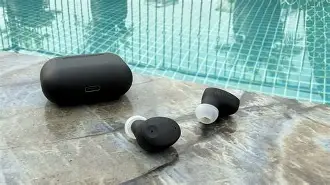
The ZE3000 immediately distinguishes itself through its aesthetic and physical build. Eschewing the smooth, pebble-like surfaces common in the TWS market, Final opted for a "Shibo" finish—a textured coating reminiscent of high-end camera bodies or traditional Japanese paper. This finish isn't just about style; it provides a tactile grip that resists fingerprints and scratches, a welcome relief from the glossy plastic of many competitors. The angular design of the earbuds themselves follows Final’s signature "three-point fit" philosophy. By focusing on three specific contact points in the ear—the tragus, the ear canal, and the concha—the ZE3000 manages to stay secure without the need for intrusive wings or heavy pressure.
Acoustic Architecture: The f-Core DU Driver
At the heart of the ZE3000 is the "f-Core DU" driver. In most TWS earbuds, the driver diaphragm is glued to the surround, which can lead to uneven tension and distortion as the diaphragm moves. Final’s engineers developed a 6mm driver where the diaphragm is molded directly into the surround using specialized resin. This creates a more uniform movement and significantly reduces total harmonic distortion (THD). When listening to complex orchestral pieces or high-bitrate acoustic recordings, this precision is audible. There is a sense of "speed" and "decay" to the notes that typically requires a wired connection and a dedicated digital-to-analog converter (DAC).
The f-Link Damping System
One of the biggest challenges in TWS design is managing the internal air pressure within the sealed housing. Most earbuds handle this by drilling a vent, but this can lead to sound leakage and inconsistent bass response. Final developed the "f-Link" damping system, which creates an internal acoustic chamber to regulate pressure without compromising the IPX4 water resistance. This system allows the ZE3000 to achieve a natural, open soundstage that is remarkably wide for a closed-back earbud. Instead of the music sounding like it is vibrating inside your skull, the ZE3000 projects a "room feel" where instruments have distinct placement and air between them.
Connectivity and Codecs
While the ZE3000 lacks an app for customization, it supports high-quality Bluetooth codecs including aptX and aptX Adaptive. For Android users with compatible hardware, this allows for 24-bit/48kHz audio streaming, which pairs perfectly with the high-resolving nature of the f-Core DU driver. Even for iOS users limited to AAC, the internal tuning remains consistent. The connection stability is robust, thanks to the use of a reliable Qualcomm chipset, though it should be noted that the ZE3000 does not support multipoint pairing—a feature many professionals look for when switching between a laptop and a phone.
Real-World Performance: The Audiophile Experience
In practical use, the Final ZE3000 is a polarizing device. If you are a commuter who spends hours on loud trains or airplanes, the absence of Active Noise Cancellation will be felt. While the passive isolation provided by the Type-E ear tips is excellent, it cannot compete with the silence-generating algorithms found in flagship TWS models. However, when you step into a quieter environment—a library, a home office, or a park—the ZE3000 reveals its true strength. The tonal balance is "U-shaped" but leans toward neutrality. The bass is textured and fast rather than boomy; the mids are clear and slightly recessed to avoid vocal fatigue; and the treble is sparkling without being sibilant.
Looking for the best Audio & Headphones deals on Amazon?
View Offers →Battery life is another strong suit, offering roughly 7 hours per charge with an additional 28 hours in the case. This puts it in the upper tier of TWS endurance. The touch controls are located on the flat faceplates and are generally responsive, though like all touch-based systems, they can occasionally register accidental taps when adjusting the fit. The microphone quality is adequate for voice calls in quiet rooms, but the "sound-first" focus means the background noise suppression during calls is basic compared to tele-communications focused rivals.
Pros and Cons
- Unmatched Sound Purity: Delivers a level of detail and transparency that rivals many wired IEMs in the same price bracket.
- Superior Build Quality: The "Shibo" finish is durable, aesthetically pleasing, and provides a premium tactile experience.
- Ergonomic Comfort: The three-point fit design allows for long listening sessions without the "ear pressure" sensation common in sealed earbuds.
- Acoustic Engineering: Features genuine innovations like the f-Core DU driver and f-Link damping system rather than relying on software DSP.
- High-Resolution Codec Support: Support for aptX Adaptive ensures low latency and high-bitrate audio for compatible devices.
- Excellent Battery Life: 35 total hours of playback ensures infrequent charging cycles for the average user.
- No Active Noise Cancellation (ANC): The reliance on passive isolation makes these less ideal for very noisy environments like airplane cabins.
- Lack of App Integration: There is no official app for firmware updates, EQ adjustments, or custom button mapping.
- No Multipoint Connectivity: Cannot stay connected to two devices simultaneously, which may hinder productivity for some users.
- No Transparency Mode: You must remove the earbuds to hear your surroundings clearly, as there is no ambient sound pass-through feature.
- Microphone Limitations: While fine for casual calls, the mic struggles to isolate the voice in windy or crowded outdoor settings.
Comparison: Final ZE3000 vs. Standard TWS Features
To understand where the ZE3000 sits in the market, it is helpful to compare its feature set against what is generally expected in the $150–$200 TWS price range.
| Feature | Standard High-End TWS | Final ZE3000 |
|---|---|---|
| Active Noise Cancellation | Dual or Triple-mic hybrid ANC | None (Passive Isolation Only) |
| Tuning Method | Heavy DSP and Software EQ | Physical Acoustic Engineering |
| Transparency Mode | Standard (Digital Pass-through) | None |
| Multipoint Pairing | Commonly Supported | Not Supported |
| Dust/Water Resistance | IPX4 to IP57 | IPX4 |
| Sound Philosophy | Consumer Bass-Heavy / V-Shaped | Audiophile / Natural Transparency |
Buying Guide: Who is the ZE3000 For?
Deciding whether to buy the Final ZE3000 requires an honest assessment of your priorities as a listener. Because this product deviates so sharply from the industry trend of "all-in-one" utility, it is not a "blind buy" for everyone. Consider the following categories to see where you land.
The Critical Listener
If your primary goal is to enjoy high-fidelity music while working or relaxing, the ZE3000 is arguably the best value in the TWS market. Most wireless earbuds struggle with "timbre"—the natural sound of instruments like violins or acoustic guitars. The ZE3000 handles these with a realism that is rarely found without cables. If you find the sound of most modern earbuds to be "muffled" or "processed," the clarity here will be a revelation.
The "Tech-First" User
If you value features like auto-pause when you take an earbud out, voice assistant integration, and the ability to tweak sound profiles via a smartphone app, the ZE3000 will frustrate you. It is a "dumb" device in the sense that it simply plays what it is told to play. There are no sensors to detect your ear, and no software to customize the experience. For the tech-savvy user who wants a gadget that interacts with their digital life, look elsewhere.
The Commuter and Traveler
This is the "gray area" for the ZE3000. While the passive isolation is enough to block out the hum of an office or the distant chatter in a cafe, it will not silence the roar of a jet engine. If you frequently fly or take the subway, you may find yourself cranking the volume to dangerous levels to overcome ambient noise. In these scenarios, a pair of earphones with even mediocre ANC will often provide a better subjective experience than a high-fidelity pair without it.
The Design Enthusiast
Many buyers are drawn to Final products because of their "Made in Japan" design philosophy. The ZE3000 feels like a piece of high-end audio equipment rather than a disposable electronic toy. The Shibo finish and angular geometry make it a standout accessory for those who appreciate industrial design and minimalist aesthetics.
Discover deals on Audio & Headphones — updated daily.
See Deals →Advanced Insights: Tuning and Soundstage
To truly understand the "truth" about the ZE3000, one must look at how it handles the soundstage. In the world of audio, the "soundstage" refers to the perceived width and depth of the music. Most TWS earbuds have a very narrow soundstage because the electronics and battery occupy the space where acoustic airflow should happen. Final’s use of the f-Link damping system effectively "tricks" the ear into perceiving a larger space. When listening to live recordings, there is a tangible sense of the venue’s size.
The tuning of the treble is another area where Final shows its expertise. High frequencies in TWS often sound "crunchy" or "metallic" due to the limitations of the Bluetooth compression and the small drivers. Final has tuned the ZE3000 to have a smooth roll-off at the very top of the frequency range, which preserves detail without causing the fatigue associated with "bright" headphones. This makes it an excellent choice for long-form listening, such as diving into a full discography while working through a deep-focus task.
Regarding the bass, it is important to manage expectations. The ZE3000 does not provide the "skull-shaking" bass that many mainstream brands promote. Instead, the bass is accurate to the recording. If the track has a deep, resonant kick drum, you will hear the vibration of the drumhead and the weight of the air. If the track is light and airy, the ZE3000 will not artificially pump up the low end. This honesty is exactly what audiophiles seek, but it may feel "thin" to someone coming from a bass-boosted consumer brand.
The Verdict
The Final ZE3000 is a bold protest against the homogenization of the TWS market. While other manufacturers are engaged in an arms race of software features and noise-canceling decibels, Final has focused entirely on the vibrating air that actually creates music. This makes the ZE3000 a specialized tool rather than a general-purpose utility. It is an earphone for people who love music more than they love gadgets.
Is it the perfect TWS? Far from it. The lack of ANC and multipoint pairing are significant omissions in 2026. However, its sound quality is so vastly superior to its feature-rich peers that it creates a category of its own. For the price, you are essentially getting a $300 wired audiophile experience with the convenience of Bluetooth. If you can accept the trade-off of noise cancellation for pure, unadulterated sound, the ZE3000 remains one of the most rewarding audio investments available today. It is a reminder that at the end of the day, the most important part of any earphone is how it makes your favorite songs feel. In that regard, the Final ZE3000 is a resounding success.